
Metropolis Healthcare (MHL) has decided to acquire a 100 per cent stake in Gurgaon-based Core Diagnostics for Rs 247 crore. This is about 2.2x FY24 (financial year 2023-24) enterprise value (EV)/sales and estimated 14x FY26 EV/Ebitda for the deal.
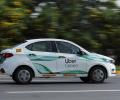
'Unless we consistently show up with the right cars, at the right time, priced fairly, we risk becoming irrelevant very quickly.'
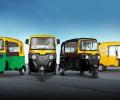
In a fragmented electric three-wheeler market where no company has more than a 10 per cent share, leave alone a dominant presence, can Bajaj Auto storm in and become king? The company is set to launch its range of electric auto rickshaws in June and hopes to replicate its success in ICE three-wheelers where it is the undisputed market leader with a 63 per cent market share. Can it be crowned king of the electric three-wheeler market too? Overall, electric sale volumes are growing at breakneck speed.

Automotive (auto) major Mahindra & Mahindra (M&M), which is readying to launch nine sport utility vehicles (internal combustion engine/ICE), seven Born Electric Vehicles (BEVs), and seven light commercial vehicles by 2030, has outlined an investment of Rs 27,000 crore in its auto business between 2024-25 (FY25) and 2026-27 (FY27). Over the next three years, the company will deploy Rs 37,000 crore, including its auto business, farm business (Rs 5,000 crore), and service business (Rs 5,000 crore).
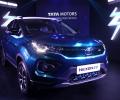
Automobile giant Tata Motors' shares were in demand on Wednesday as the stock rallied as much as 3.69 per cent to hit an intraday high of Rs 671.80 per share, before settling 3.18 per cent higher at Rs 668.45. By comparison, the BSE Sensex settled 0.10 per cent, or 72.56 points, lower at 74,029.76.

Auto Expo 2023 may not trigger a fresh rally in automobile stocks, say analysts, as this year's edition lacks participation from major listed players. It is also owing to the focus on electric vehicles (EVs), a segment where four-wheelers have minuscule market share. "In the passenger vehicles (PV) segment, Maruti Suzuki India and Tata Motors are the only listed players.
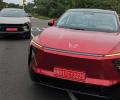
Customers who have already booked earlier variants will also have the option to upgrade to the 79 kWh battery version.
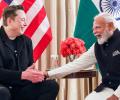
Starlink's application for offering satcom services in India had been held up for the company's inability to comply with mandatory ownership disclosure norms.
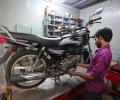
Hero MotoCorp (HMCL) saw strong volume performance in the first quarter of the current financial year (Q1FY25), but margins disappointed due to weak spare part sales and negative electric vehicle (EV) margins. The company hopes for a strong festive season due to better rural sentiment. Revenue grew 16 per cent year-on-year (Y-o-Y) to Rs 10,140 crore, operating profit was up 21 per cent to Rs 1,460 crore, and adjusted net profit grew 19 per cent Y-o-Y to Rs 1,120 crore.

The country saw a massive year-on-year surge in the demand for electric vehicles, with retail sales of electric two-wheelers rising by 58 per cent, passenger vehicles by 130 per cent, three-wheelers by 82 per cent, and commercial vehicles by 171 per cent in March 2023, according to the data shared by the Federation of Automobile Dealers Associations (Fada). According to a report by JMK Research, the EV segment as a whole grew by 157 per cent during FY23, to 1,180,597 units, from 458,746 units a year ago. Overall, EV sales in March 2023 rose by 82 per cent from the March 2022 figure, the JMK report added.

Any industrial policy is only as good as how it is applied and the other reforms that support it. This was as true 40 years ago as it is now, points out Debashis Basu.

India's electric mobility goal, which has so far been riding on two wheels, is all set to graduate to four wheels. At least, the journey has begun. Hyundai Motor India said it would invest Rs 4,000 crore till 2028 to launch half-a-dozen electric vehicles (EVs) in India. It would eventually straddle premium and mass segments. The first of these - the electrified version of an internal combustion engine (ICE)-powered model - will go on sale as early as next year.
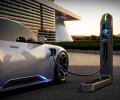
The country's first ever carmaker, Hindustan Motors, is looking at a second coming. Talks are on for a joint venture with a European auto company focused on the electric vehicle (EV) space. A memorandum of understanding (MoU) has been signed and due diligence is expected to start shortly and will take 2-3 months to conclude.

They don't just want better returns -- they're looking for global opportunities, more variety and smarter ways to grow their money, says Soubho Moulik, CEO, Appreciate.

Major two-wheeler (2W) manufacturers in India witnessed a single-digit decline in domestic sales in November after dispatches had picked up in October for the festive season when wholesales went up by 14 per cent and retail also grew by 36 per cent.

In a boost to the electric vehicle boom in India, Taiwanese major Hon Hai Technology Group (aka Foxconn) is likely to set up an EV manufacturing unit in India through its subsidiary Foxtron. Amid speculation that the company may look at Tamil Nadu and probably the Ford India unit near Chennai for its new facility, sources indicate that the group was already betting big in the electric vehicle component space in India through Bharat FIH, which is already having a tie up with companies like Ola Electric and Ather. Bharat FIH currently has two manufacturing units in Tamil Nadu's Sriperumbudur that manufactures phones like Apple iPhones and Xiaomi phones.

Success in this space demands more than luck, it requires sharp analysis, disciplined execution, and understanding market movers.

When Gensol Engineering made its public market debut through a small and medium enterprises (SME) initial public offering (IPO) in September 2019, its promoters held a commanding 96 per cent stake. Now, that figure has shrunk to a "negligible" fraction.
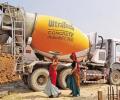
UltraTech Cement's announcement that it would snap up a controlling stake in India Cements may only be a sign of more to come. In the wake of one of the country's most expensive deals in recent times, cement majors may slug it out to add smaller firms from the region to their portfolio. UltraTech's buy is the latest in the four deals the southern market has seen in less than a year, with Adani Cement being the other buyer.
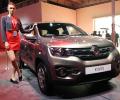
'We are very quickly going to announce the timeline of our launches, which should start giving us the turnaround'

Tata Motors on Friday reported a 62.2 per cent decline in consolidated net profit to Rs 4,003 crore in the June quarter, impacted by volume decline across segments, drop in JLR profits due to US tariffs and high base effect due to gain from sale of discontinued operations. The auto major had posted a consolidated net profit of Rs 10,587 crore in the April-June quarter of the previous fiscal, Tata Motors Ltd (TML) said in a regulatory filing.
Although UltraTech Cement's results for the December quarter of the current financial year (Q3FY25) were not an improvement compared to Q3FY24, the company managed to surpass Street expectations. The company's profit attributable to the owners of the parent dropped 17.4 per cent year-on-year (Y-o-Y) to Rs 1,469.5 crore in Q3FY25 as against Rs 1,777 crore in Q3FY24.

Dabur's performance in the July-September quarter of the current financial year (Q2FY25) was weak but in line with consensus. Consolidated revenue declined 5 per cent year-on-year (Y-o-Y) due to a temporary adjustment in General Trade (GT) inventory. Indian revenue declined 7.6 per cent, while international business grew 13 per cent Y-o-Y in constant currency (CC) terms.

Eicher Motors is a leader in the premium motorcycle segment, where it holds market share of over 85 per cent under the Royal Enfield (RE) brand. The company's joint venture VE Commercial Vehicles (VECV) with Volvo, where it holds 54.5 per cent stake, gives it a strong footing in commercial vehicles (CVs). The company had good results in FY23 and it has a strong balance sheet and good operating margins.

'In April, we saw a 10 per cent growth in our own volumes.'
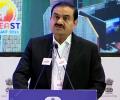
The Adani Group plans to invest a record $15-20 billion across businesses over the next five years to chart out the next phase of growth, chairman Gautam Adani said on Tuesday as he touted the conglomerate's strong balance sheet and robust business to shrug off relentless scrutiny it faces. Record earnings from the businesses ranging from seaports to airports, renewable energy parks to data centres, cement to gas and electricity has built India's largest infrastructure group that not only exists just to serve the markets but to serve the nation's destiny, he said.
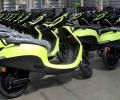
From premium electric motorcycles to mass-market scooters, manufacturers are rapidly expanding their portfolios to capture a larger share of the booming market.
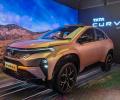
Tata Motors is looking to consolidate its position in the SUV segment as it marks its entry into the highly competitive mid-size space which is currently dominated by South Korean and Japanese carmakers. The Mumbai-based auto major on Monday launched midsize SUV coupe Curvv with petrol and diesel powertrains with a price starting at Rs 9.99 lakh. The company has already unveiled the electric version of the model in August.

The BSA Gold Star is launched....Ola Enters e-motorbikes Biz... Bajaj, TVS To Enter e2Ws Market...

koda Auto India is set to drive in a new car by the first half of next year to reach its target of 100,000 unit annual sales in the country by 2026. The compact sports utility vehicle (SUV) will be positioned against the likes of Maruti Brezza, Hyundai Venue, and Kia Sonet, and would be competitively priced, a senior company official said. koda will also export the car to right-hand-drive markets like Australia, New Zealand and the Asean nations.
Some of the key names include: Maruti, M&M, Ashok Leyland, Britannia, Ultratech, JK Cement, Havells, Voltas, Amber, Metro, Trent, LemonTree, Indian Hotels, Niva Bupa, HDFC Life, IGL, Acme Solar, Suzlon, Swiggy, Delhivery, ICICI Bank, HDFC Bank, Bajaj Finance, Shriram Finance," according to a report by Motilal Oswal Financial Services.
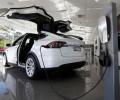
Sales of total electric vehicles in India are expected to be around 10 lakh units this year, equal to what was sold collectively in the last 15 years, mainly riding on the good traction witnessed by electric two-wheelers, Society of Manufacturers of Electric Vehicles (SMEV) said on Thursday. In 2021, the sales of electric two-wheelers (E2Ws) in the country jumped over two-fold at 233,971 units driven by a good traction of high-speed scooters as compared to 100,736 units in 2020, SMEV said in a statement. "We haven't seen better days than the last few months in the entire EV journey.
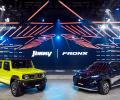
Maruti Suzuki India Ltd (MSIL), the largest passenger vehicle manufacturer in India, has set a road map to expand its global presence by targeting exports of 800,000 units by the end of this decade -- almost double the approximately 280,000 units sent abroad in 2023-24, Rahul Bharti, executive director, corporate affairs, told Business Standard. The company's upcoming electric vehicle (EV) strategy is expected to play a crucial role in its global ambitions.

The feud reached its peak when Musk made explosive allegations about Trump's connection to disgraced financier Jeffrey Epstein, marking a dramatic escalation in their increasingly personal conflict.

...But sales of domestic passenger vehicles dropped 2% to 3% year-on-year in August owing to low demand.
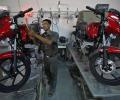
Bajaj Auto's market capitalisation (market cap) hit Rs 2 trillion mark for the first time. The stock of the two and three-wheeler major rallied 6 per cent to hit a new high of Rs 7,420 on the BSE in Tuesday's (January 9) intraday trade after its board approved Rs 4,000 crore share buyback at Rs 10,000 per share. The stock ended the day at Rs 7,093.75, up 1.55 per cent and its market cap a shade above Rs 2 trillion.
French auto major Renault on Monday said it will buy out its Japanese partner Nissan's stake in their Indian joint venture -- Renault Nissan Automotive India Private Ltd. Renault Group would own 100 per cent of Renault Nissan Automotive India Private Ltd (RNAIPL), by acquiring the 51 per cent shareholding currently held by Nissan, the company said in a statement.

This is not the first EV that Mercedes would be making in India though. It has been making the EQS sedan here for the last 18 months, and has sold 500 units of the car.

Bajaj Auto is gearing up to launch clean-energy vehicles including another motorcycle powered by compressed natural gas (CNG), showcase ethanol-powered motorcycles and three-wheelers next month, as well as launch a new Chetak platform early next year, as it closes in on hitting 100,000 monthly sales from clean-energy vehicles this festival season. In an interview with CNBC-TV18, Bajaj Auto managing director Rajiv Bajaj said these initiatives were part of the firm's broader goal to achieve monthly sales of 100,000 clean-energy vehicles this festival season.

If electric cars with a real range of more than 400 km are launched, the anxiety regarding the charging points will come down, and more people will buy EVs.
